
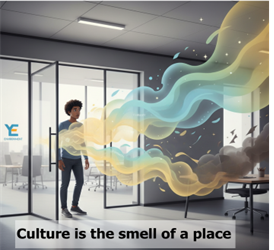
Most leaders talk about culture as a series of buzzwords on a boardroom slide. But if you want to know the truth about an organisation’s health, you don’t look at the mission statement. You look at the ‘smell’.
The late Professor Sumantra Ghoshal famously used the metaphor of a forest to describe organisational atmosphere. In a ‘winter’ forest, the environment is cold and draining. In a ‘summer’ forest, it is vibrant and energising. Culture is that invisible yet palpable ‘smell’ that dictates how people behave when no one is watching. These are the underlying norms, unwritten rules, and shared attitudes
The Litmus Test of Leadership
My former business partner, Dave Gillam, had a more grounded way of measuring this in the early 1980s. He often observed:
“The state of industrial relations in a business can usually be assessed by inspecting the toilets and employee changerooms.”
It sounds simplistic, but it is a profound leadership truth. Environment is a pillar of culture. If employees are expected to take pride in their work but are provided with poorly maintained, neglected facilities, there is a fundamental disconnect in values.
Some managers argue that modern facilities will just be abused by certain staff. If that is the case, the problem is not the plumbing, it’s the recruitment. If your hiring process isn’t screening for people who share your leadership’s values, you are inviting the ‘winter forest’ into your building.
Why Culture is Your Most Expensive Asset
Culture isn’t just a ‘nice-to-have’ HR initiative; it is a financial driver. It determines:
- Engagement & Retention: High-potential recruits in a toxic culture will either quit or ‘quietly submerge’, doing just enough to stay out of trouble while keeping their best ideas to themselves.
- The Bottom Line: Replacing an employee typically costs between 50% and 200% of their annual salary. A toxic culture is essentially a tax on your P&L.
- Operational Excellence: From how targets are met to how conflict is resolved, culture dictates whether the business performs optimally or merely survives.
Building the ‘Summer Forest’: A Leadership Checklist
To move from a toxic atmosphere to a high-performing team, leadership must move beyond rhetoric and focus on these tactical anchors:
- Radical Alignment: Ensure everyone is rowing in the same direction with shared values.
- Psychological Safety: Create a space where employees can speak up without fear of retribution.
- Active Leadership: Leaders at every level must get to know their people, greet them with respect, and master the art of active listening.
- Proactive Coaching: Performance management is a daily conversation, not an annual event. Disciplinary action should be the final step after consistent, fair, and corrective coaching.
- Barrier Removal: When performance stalls, wise leaders don’t just blame the person; they identify and remove the barriers in their way.
The Verdict
You can recruit a ‘star’ player, but if you drop them into a toxic environment, the environment wins every time. Culture is the invisible force that shapes behaviour, motivation, and performance.
As a leader, take a walk through your facility today. What does the ‘smell’ of your business tell you about your future?

Bruno Bruniquel
Ready to lead the change? Discover the frameworks that turn toxic workplaces into high-performance cultures. Call +27 83 226 3379 to start the conversation or email bruno@centre-for-leadership.com
Our team have worked with these companies


